
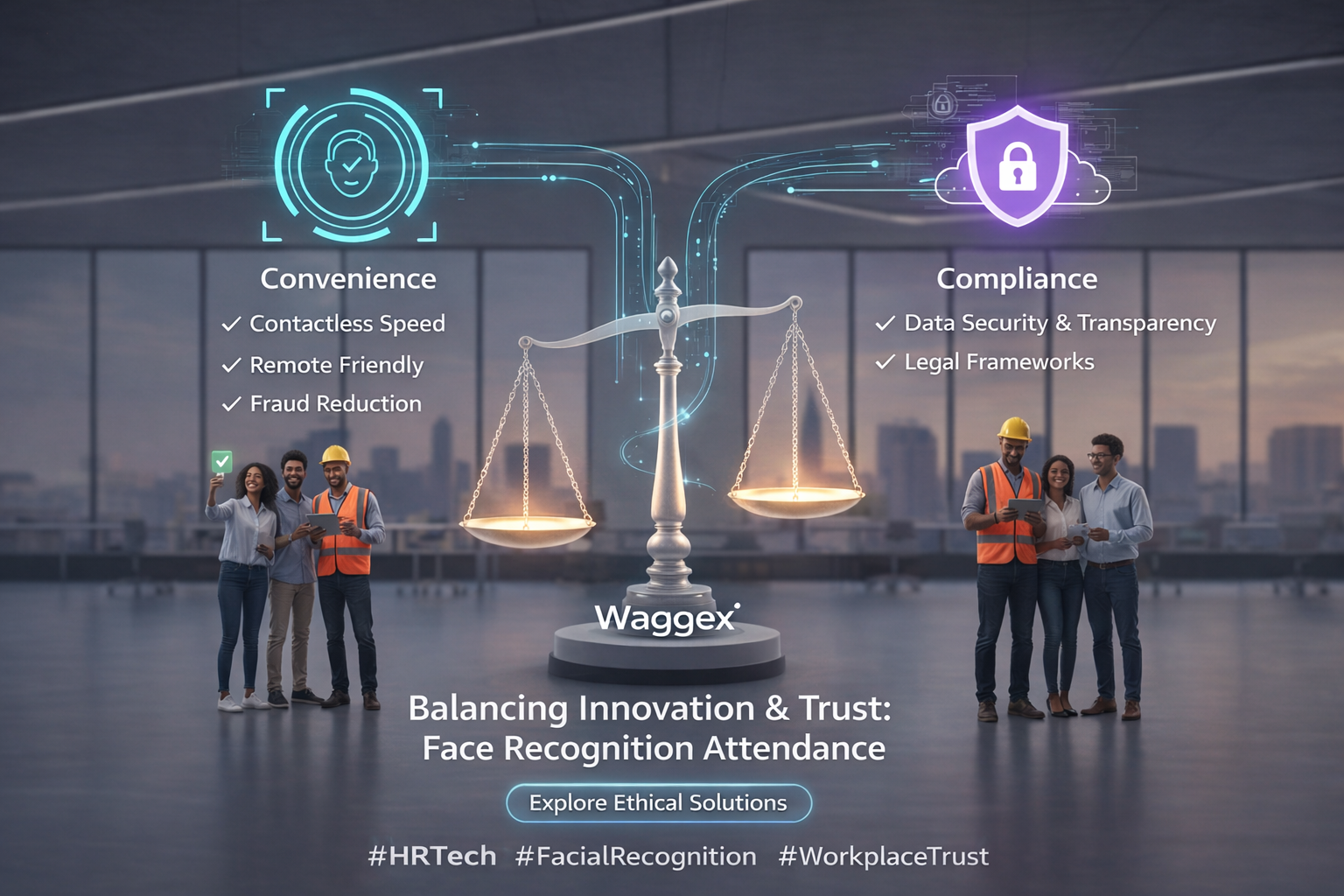
Face Recognition Attendance: Convenience vs Compliance
Face recognition attendance systems are rapidly replacing traditional attendance methods such as fingerprint scanners, punch cards, and manual registers. Businesses adopt these systems for speed, accuracy, and convenience—but with convenience comes an important question: does face recognition attendance meet compliance and privacy expectations?
For modern businesses, especially SMEs and remote teams, the challenge is not choosing between convenience and compliance. The real challenge is balancing both.
This article explores what face recognition attendance is, why businesses are adopting it, how compliance concerns arise, and how organizations can implement it responsibly without compromising trust or legality.
What Is Face Recognition Attendance?
Face recognition attendance is a biometric attendance system that uses facial features to identify and verify employees during punch-in and punch-out.
Instead of:
- Fingerprint scanners
- ID cards
- Manual sign-ins
Employees simply mark attendance using a camera-enabled device such as a mobile phone or tablet.
The system captures facial data, matches it with registered profiles, and records attendance automatically.
Why Businesses Are Switching to Face Recognition Attendance
The adoption of face recognition attendance systems is driven primarily by convenience and accuracy.
Key Benefits of Face Recognition Attendance
- Contactless attendance (hygienic and safe)
- Faster punch-in and punch-out
- Reduced proxy attendance
- No hardware dependency like biometric devices
- Ideal for remote and field teams
For organizations managing distributed teams, face recognition attendance removes location and infrastructure limitations.
Convenience Side: Why Face Recognition Attendance Works
1. Speed and Ease of Use
Employees can mark attendance within seconds—no queues, no devices, no manual effort.
2. Remote Workforce Compatibility
Face recognition attendance works seamlessly for:
- Remote teams
- Field staff
- On-site service employees
Attendance can be recorded using a mobile app from approved locations.
3. Reduced Attendance Fraud
Facial verification ensures:
- The right employee is marking attendance
- No buddy punching
- No shared credentials
This significantly improves attendance accuracy.
Compliance Side: Where the Concerns Begin
While face recognition attendance offers operational benefits, it also raises compliance and privacy concerns—especially around biometric data.
Common Compliance Questions Businesses Face
- Is facial data legally allowed to be collected?
- How is biometric data stored and protected?
- Are employees informed and consenting?
- Is the system compliant with labor and data protection laws?
These concerns are valid—and ignoring them can lead to legal and reputational risks.
Understanding Biometric Compliance Requirements
Biometric data, including facial recognition data, is considered sensitive personal data in many jurisdictions.
Key Compliance Principles Include:
- Consent: Employees must be informed and provide consent
- Purpose Limitation: Data should be used only for attendance
- Data Minimization: Only essential data should be collected
- Security: Data must be encrypted and securely stored
- Retention Control: Data should not be stored indefinitely
Compliance is not about avoiding technology—it’s about using it responsibly.
Face Recognition Attendance vs Traditional Biometrics
Fingerprint Systems
- Require physical contact
- Fail in dusty or industrial environments
- Hardware maintenance costs
- Limited for remote teams
Face Recognition Systems
- Contactless and hygienic
- Works across locations
- Lower infrastructure cost
- Better suited for mobile-first workplaces
However, facial recognition systems must be designed with privacy-by-design principles.
How Ethical Face Recognition Attendance Solves Compliance Issues
Modern attendance platforms like Waggex focus on ethical biometric usage.
What Ethical Face Recognition Looks Like
- Facial data captured only for attendance events
- No continuous surveillance
- No tracking outside working hours
- Transparent employee communication
- Secure and encrypted data storage
This approach ensures convenience without violating privacy.
How Face Recognition Attendance Works in Practice
Step-by-Step Workflow
- Employee registers facial profile with consent
- Attendance is marked via selfie during punch-in/out
- System verifies facial match
- Attendance data is logged automatically
- Records sync with payroll and compliance reports
This automation eliminates manual intervention while maintaining accuracy.
Compliance Benefits of Face Recognition Attendance
When implemented correctly, face recognition attendance can improve compliance instead of harming it.
Compliance Advantages
- Accurate attendance records for audits
- Clear proof of working hours
- Reduced payroll disputes
- Transparent attendance policies
These benefits are especially important for labor inspections and payroll audits.
Cost vs Risk: Is Face Recognition Attendance Worth It?
Cost Factors Include:
- Software subscription
- Initial employee onboarding
- Policy documentation
Risks of Manual Attendance Include:
- Payroll errors
- Labor disputes
- Compliance penalties
- Time theft
For most businesses, the risk of manual systems outweighs the cost of automated face recognition attendance.
Employee Trust: The Missing Piece in Adoption
Technology adoption fails when employees don’t trust the system.
How to Build Trust with Face Recognition Attendance
- Clearly explain why data is collected
- Share privacy and retention policies
- Limit tracking strictly to attendance events
- Avoid continuous monitoring
When transparency is prioritized, employee resistance disappears.
Internal Linking Opportunities (Recommended)
- Link to Selfie-Based Attendance service page
- Link to Attendance & Payroll Management
- Link to Compliance & HR Automation page
This improves SEO structure and user navigation.
When Should Businesses Use Face Recognition Attendance?
Face recognition attendance is ideal when:
- Teams work remotely or in the field
- Proxy attendance is a concern
- Physical biometric devices are impractical
- Compliance-ready digital records are needed
It is not about replacing trust—it’s about supporting it with data.
Conclusion: Convenience and Compliance Can Coexist
Face recognition attendance is not a choice between convenience and compliance.
When implemented ethically, transparently, and securely, it delivers both.
Modern businesses don’t need intrusive monitoring—they need accurate, fair, and compliant attendance systems. With responsible platforms, face recognition attendance becomes a productivity enabler rather than a privacy risk.
👉 Looking for a compliant and ethical attendance solution?
Adopt face recognition attendance designed for modern workplaces.
FAQs – Face Recognition Attendance Systems
1. Is face recognition attendance legal?
Yes, when employee consent is obtained and data protection rules are followed.
2. Does face recognition attendance invade employee privacy?
No, if data is collected only during attendance events and not used for surveillance.
3. Is face recognition better than fingerprint attendance?
Yes, it is contactless, mobile-friendly, and more suitable for remote teams.
4. Can face recognition attendance integrate with payroll?
Yes, attendance data can sync directly with payroll systems.
5. Is face recognition attendance expensive?
No. Most systems are affordable and reduce long-term payroll and compliance costs.








0 Comments